You notice it on the stairs, when getting out of a chair or as you lower into a squat. That knee pain when bending means a movement you normally take for granted starts to need planning.
That symptom can have several explanations. Where it hurts, how it began and whether the knee is swollen or unstable all matter more than the word “bending” on its own.
Start with the story behind your knee pain when bending
Did you twist the knee or have a fall? Has discomfort appeared gradually after a change in activity? Is the problem worse during movement, afterwards or the next morning?
Write down the tasks that bother it most. Being able to say “the first few steps downstairs” is more useful than trying to find the right medical term. Tell your clinician if the knee locks, gives way or stops straightening fully.
Why different knees need different plans
Pain around the kneecap, joint irritation, tendon problems and injuries to structures inside the knee can all affect bending. Osteoarthritis may also be relevant for some people. A symptom list cannot reliably distinguish between them.
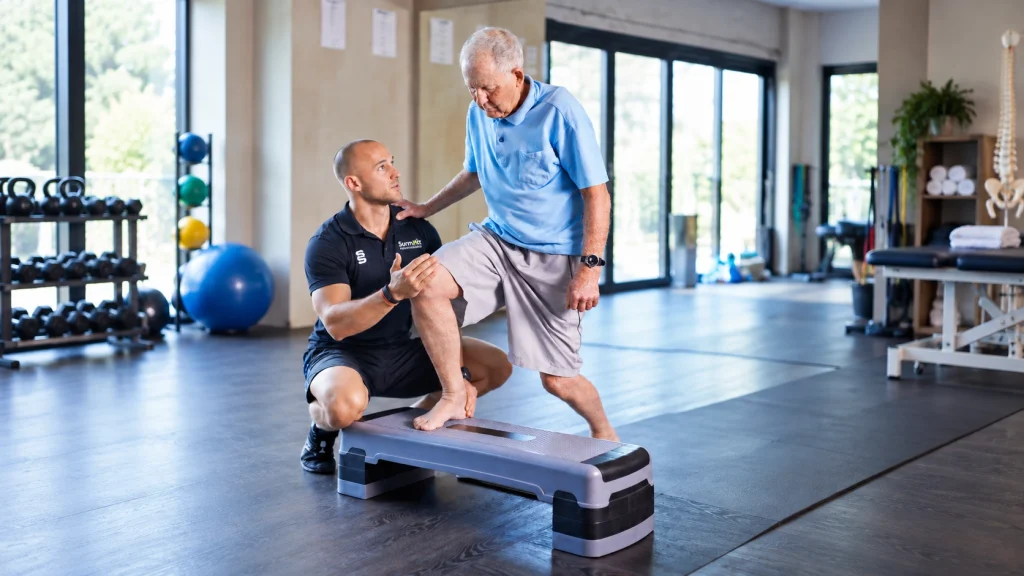
At Summit, assessment begins with your history and the tasks that are difficult. We may look at movement, strength and the response to relevant activities. If the findings suggest you need a medical assessment or further investigation, we will explain that.
Make bending tasks easier when you have knee pain
While you are waiting for advice, reduce the activities that clearly aggravate the knee. That may mean temporarily changing the depth of a gym movement or limiting repeated stairs. Use support where needed and avoid testing a painful movement over and over.
Bring questions about work and exercise to your appointment. You should know which activities are reasonable, what to adjust and how the plan will progress. An exercise prescription should reflect your symptoms and assessment, rather than a generic list of squats.
When to seek urgent help
Contact NHS 111 if the knee is very painful, badly swollen or has changed shape, or if you cannot move it or put weight on it. Locking, giving way or painful clicking also needs urgent advice. A hot, red knee with fever or feeling unwell may indicate infection and needs urgent medical assessment.
If symptoms are less urgent but continue or keep returning, arrange an assessment. Our knee pain page explains how we can help. If you are unsure what you have injured, an injury assessment can help establish the next step.
Further reading: NHS 1